


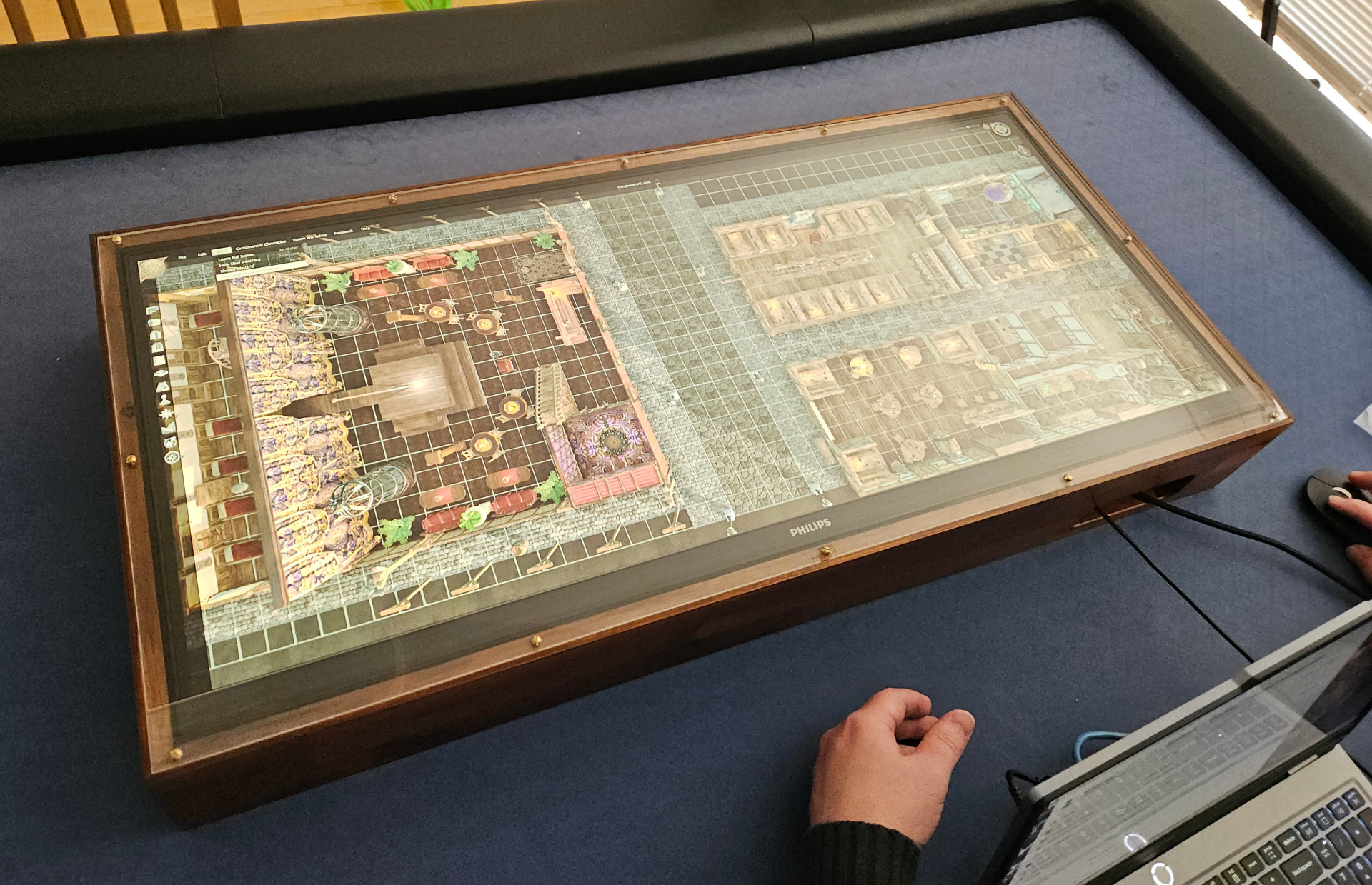
My latest woodworking build is a screen for displaying battle maps for Dungeons and Dragons. Or rather, the project is a frame that holds a monitor flat on a table. I didn’t build the monitor itself. My skills don’t extend that far.
It was inspired by the one in this video, from the creator of the Infinite Realms RPG map-making software:
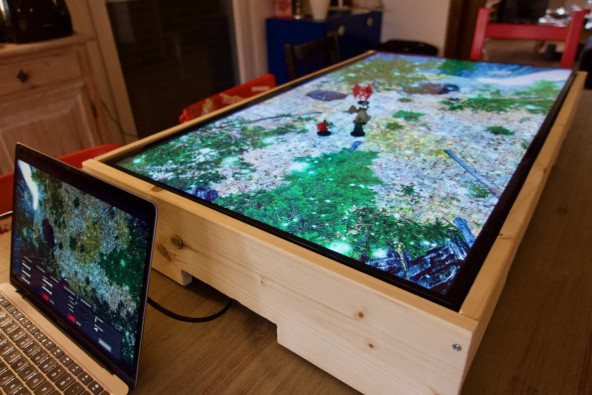
It’s a good concept, but a pretty rough and ready execution. If my gaming group was going to have this sitting in front of them throughout a six-hour session, I wanted it to look good.
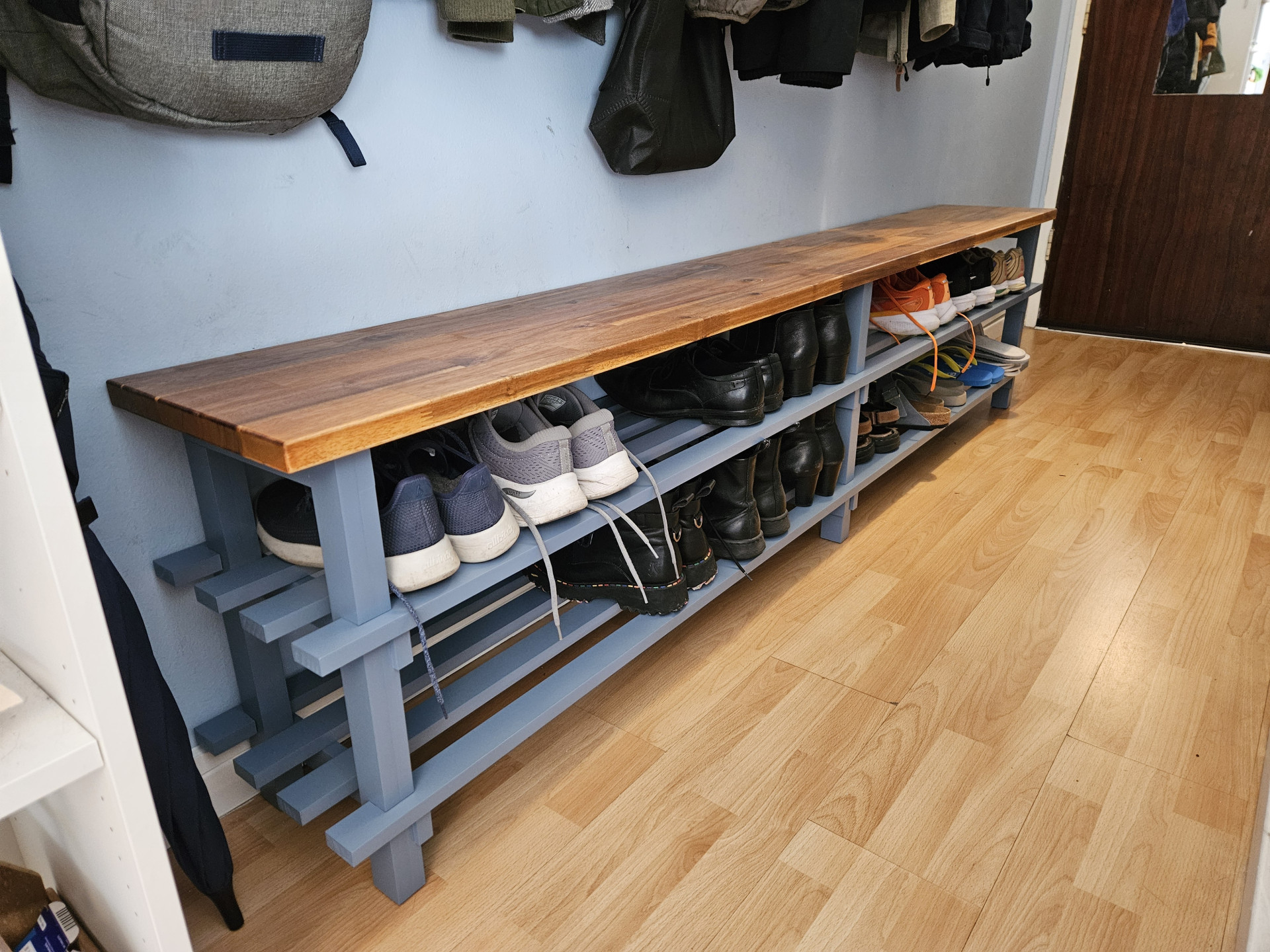
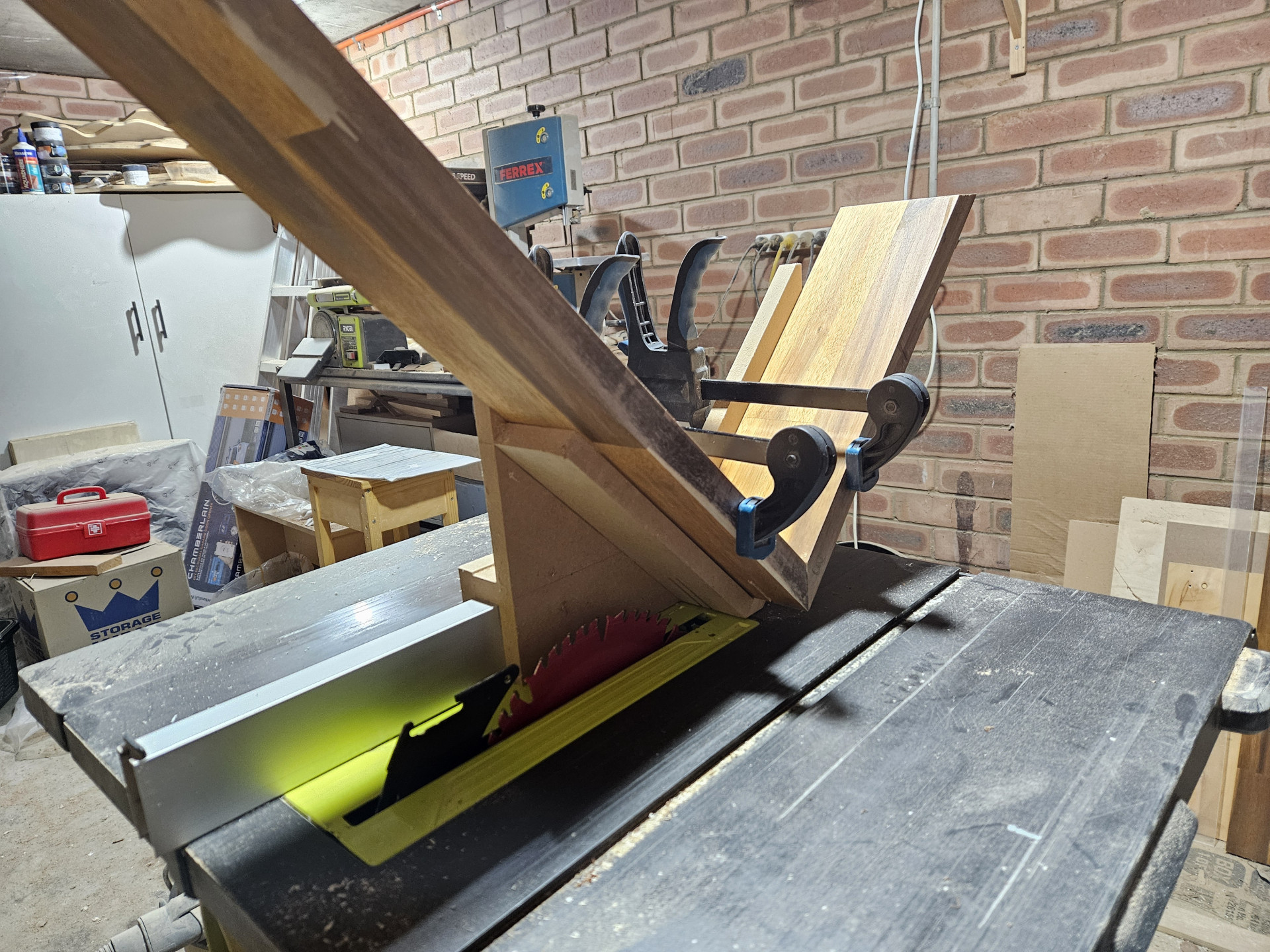
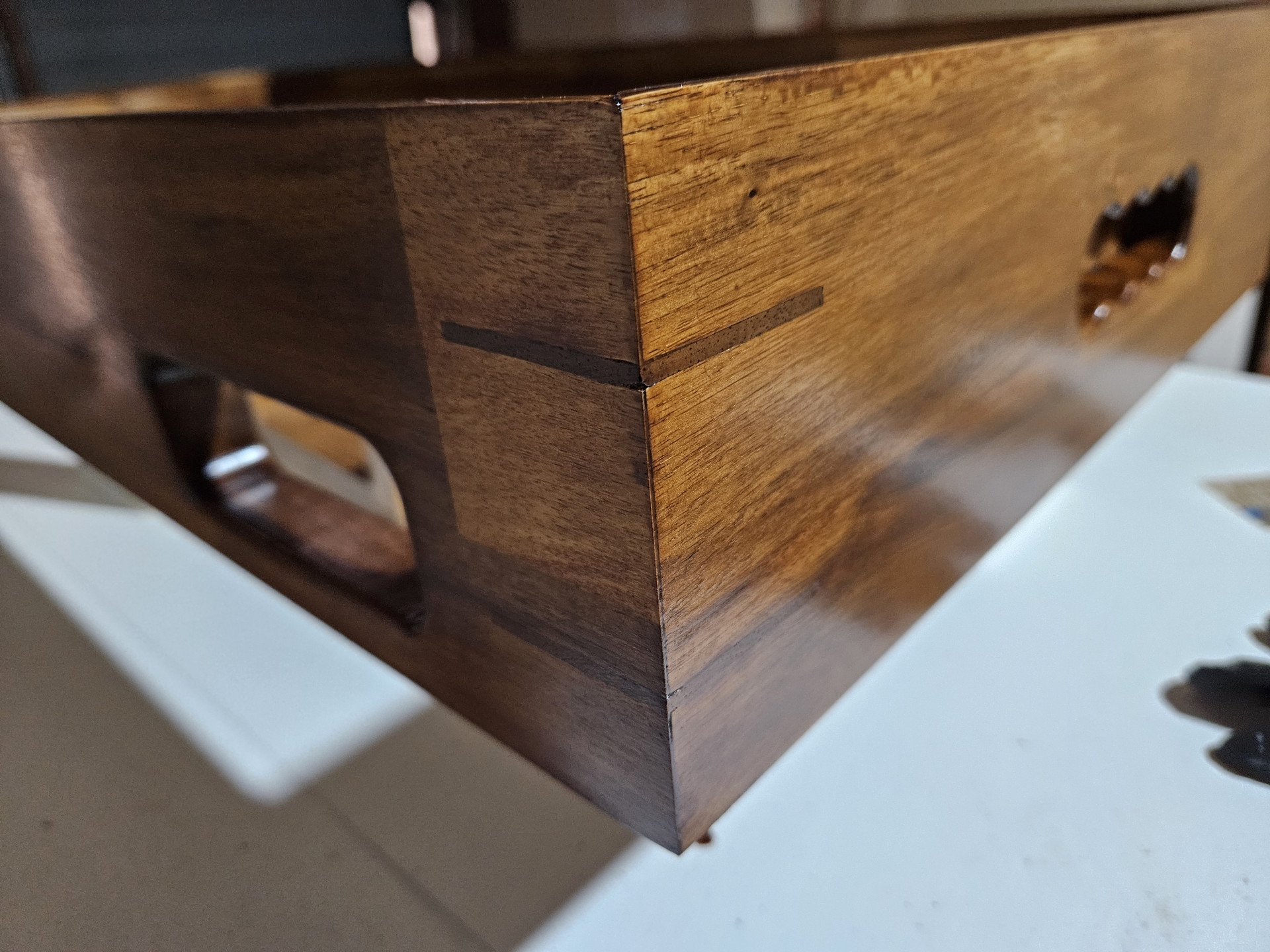
I started with some Acacia I had left over from a shoe rack I made last year. I used mitre joints with splines for extra strength, cutting the slots using a specialised jig I made a few years ago, and using thin slices of Merbau wood for the splines, which are cut flush after gluing.
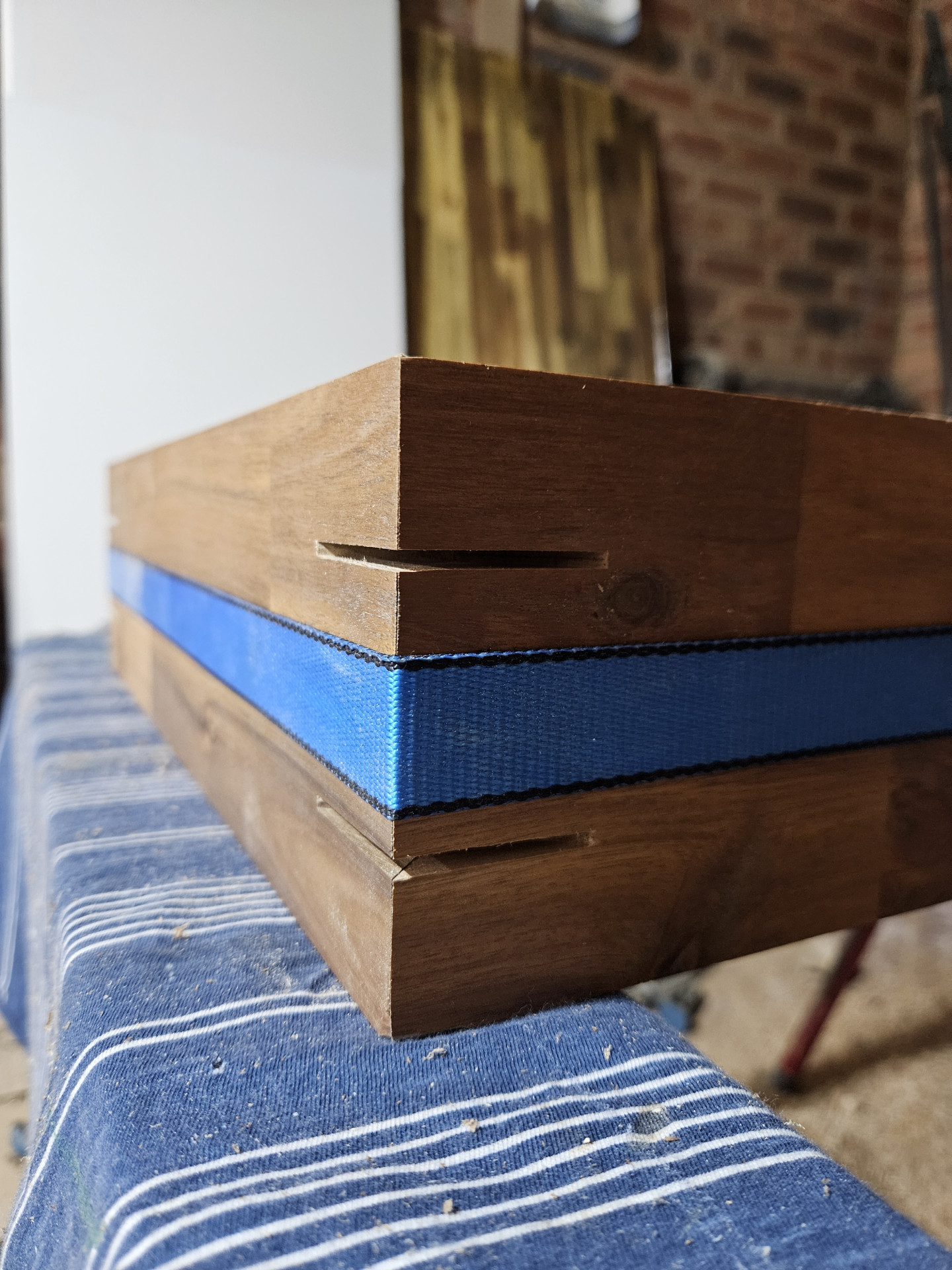
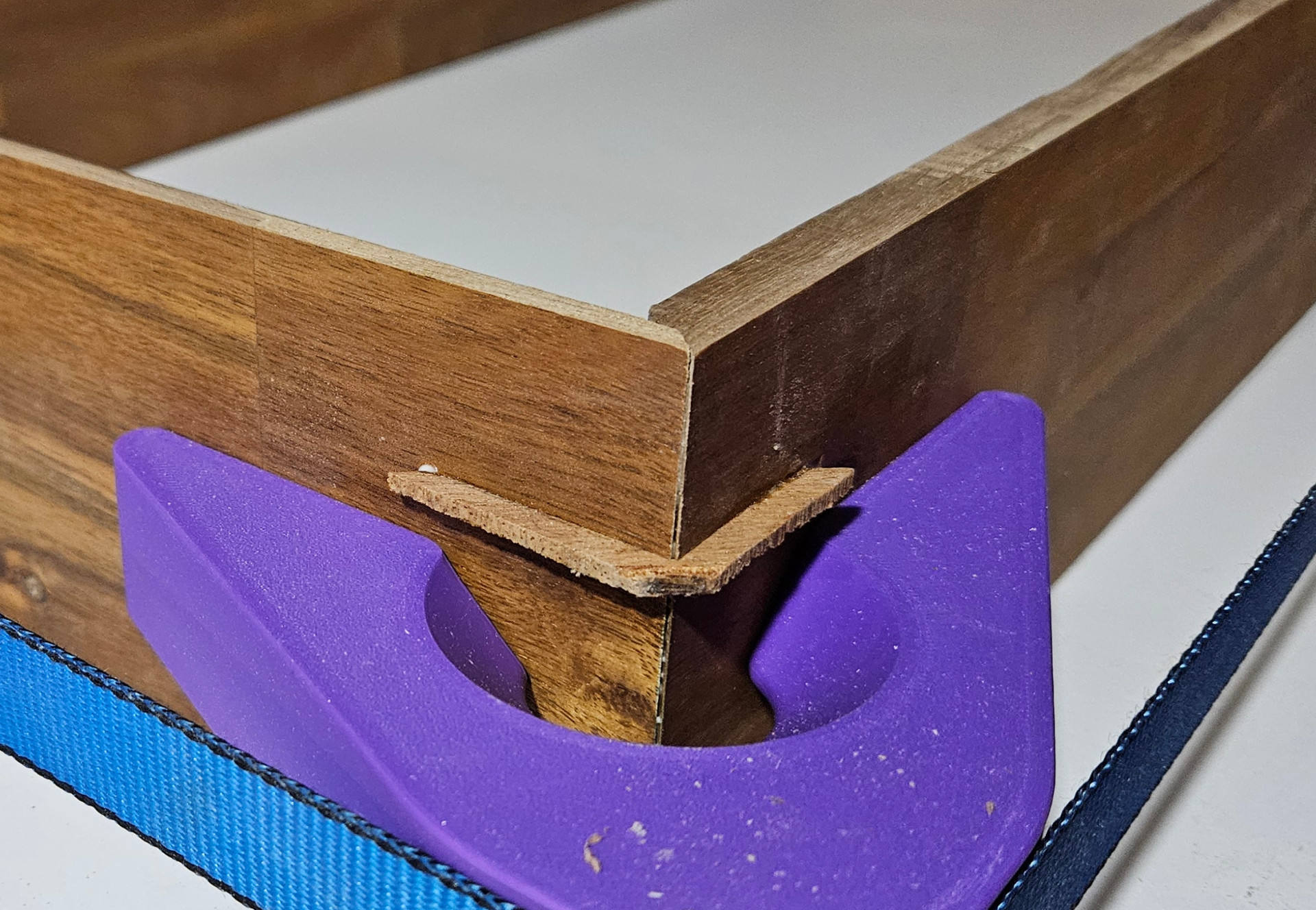
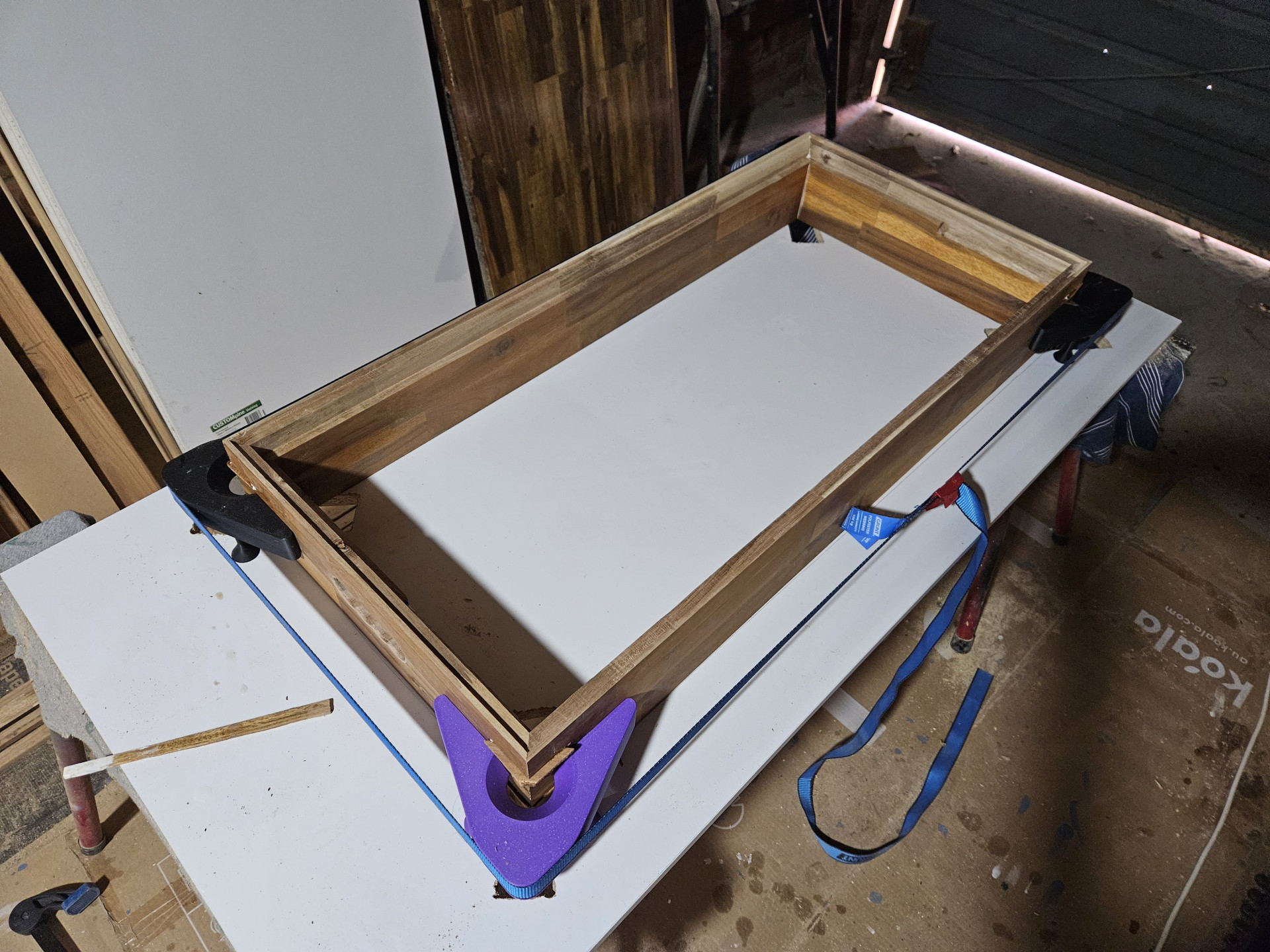
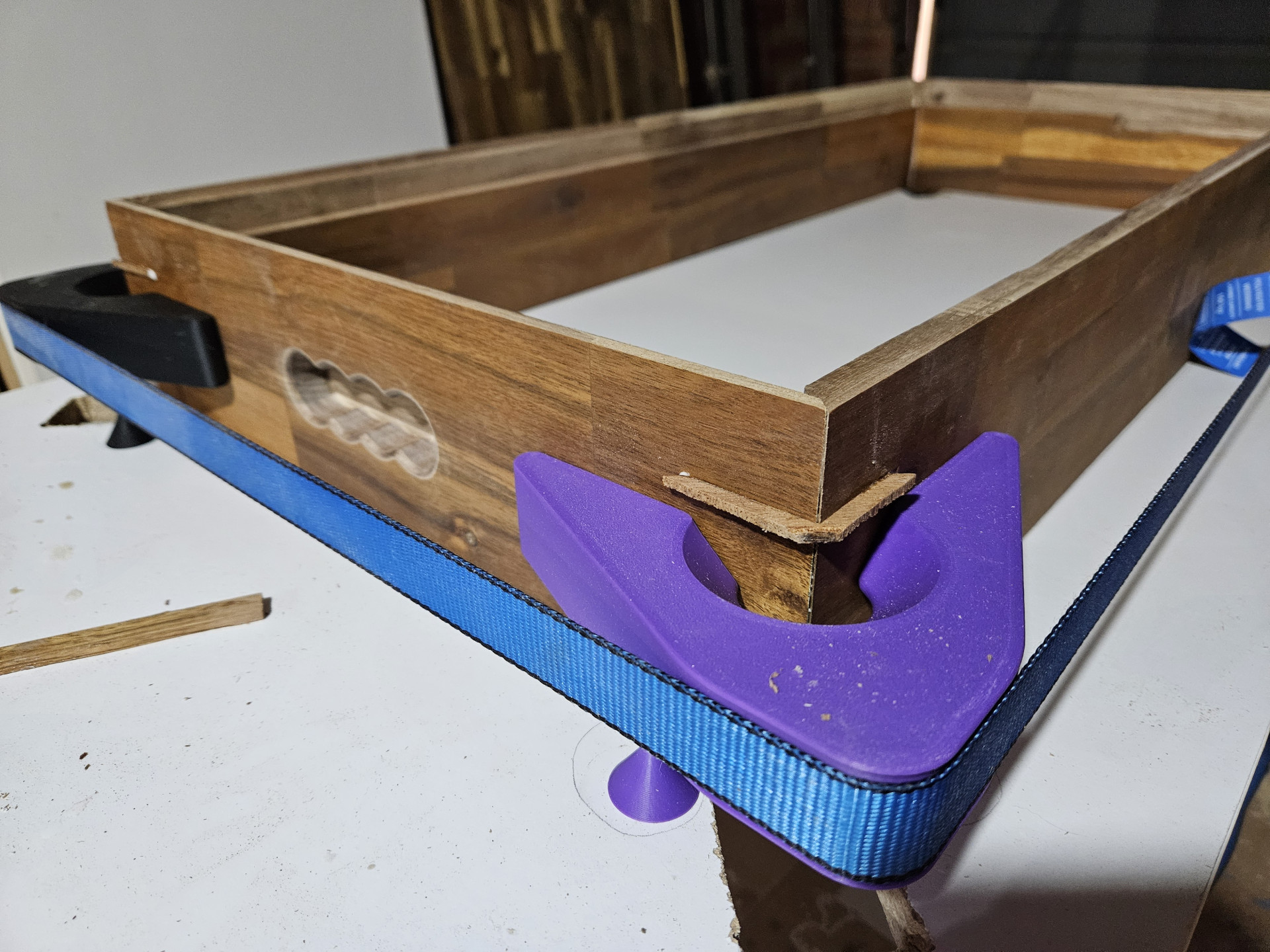
The glue-up was assisted with 3D-printed parts, so I could clamp it all up with a single strap. I designed them specifically for this build, to avoid the splines and the corners where glue would be squeezed out.
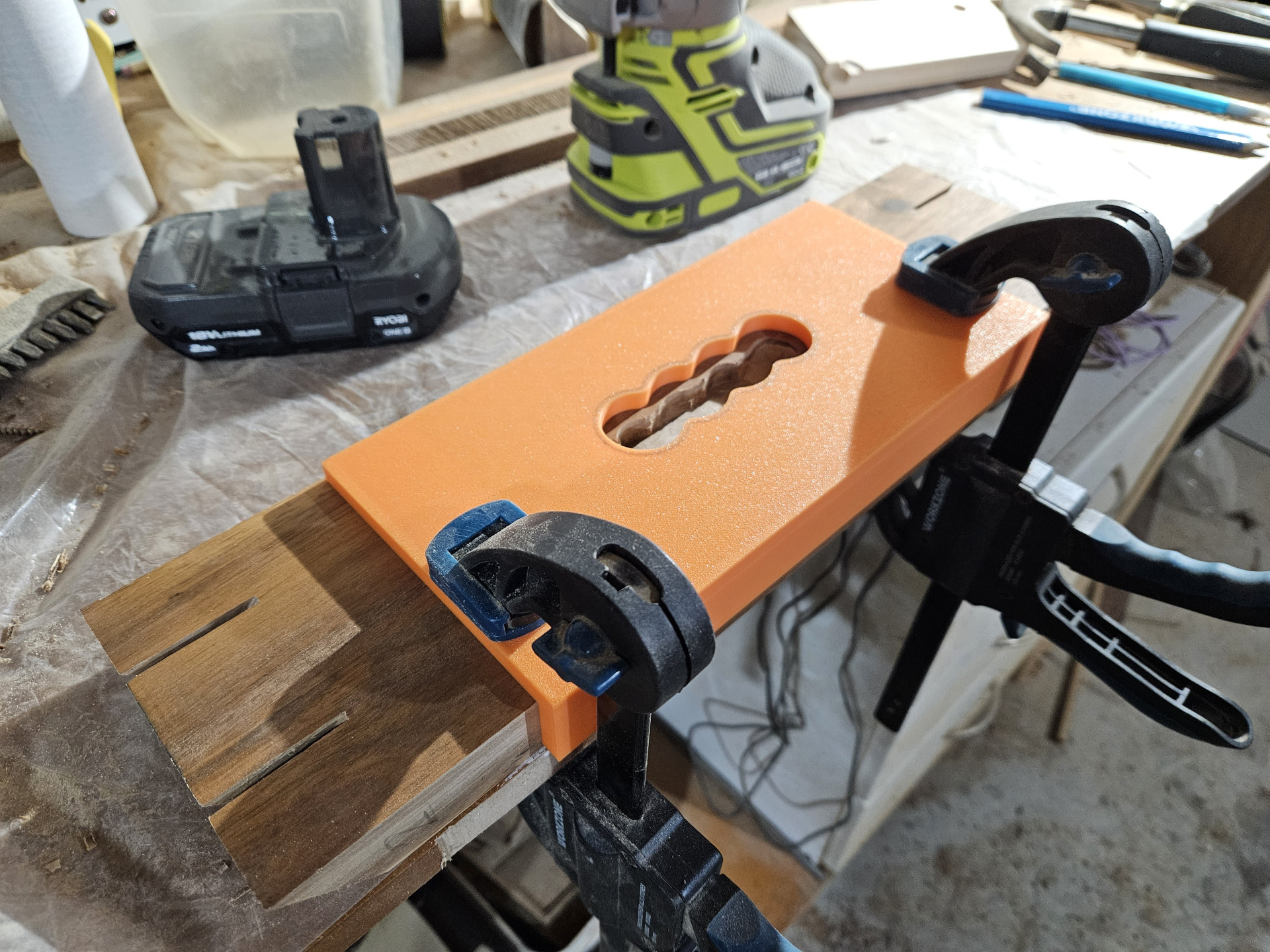
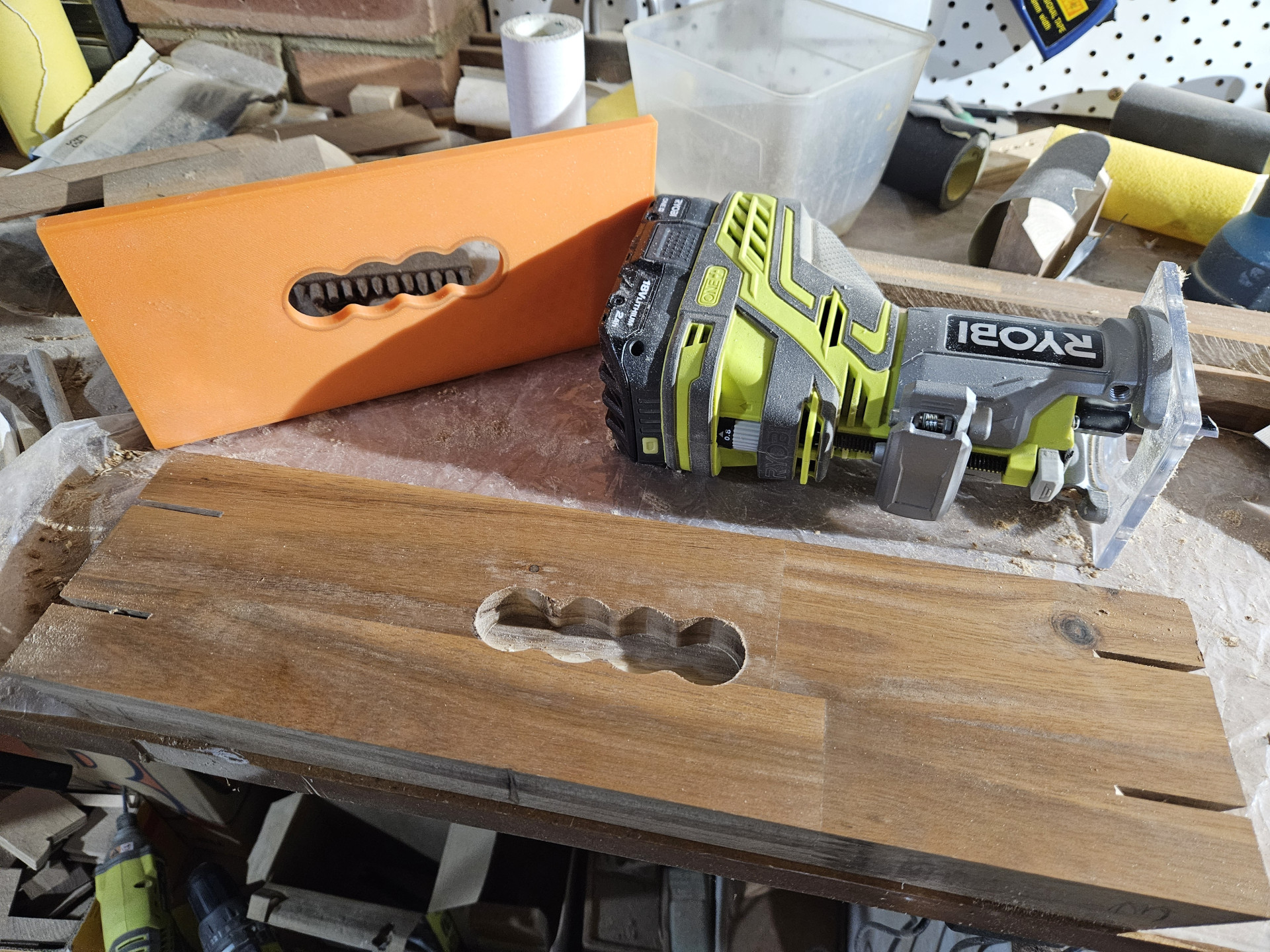
The handholds at the ends are cut with template router bit, and a 3D-printed template I designed.
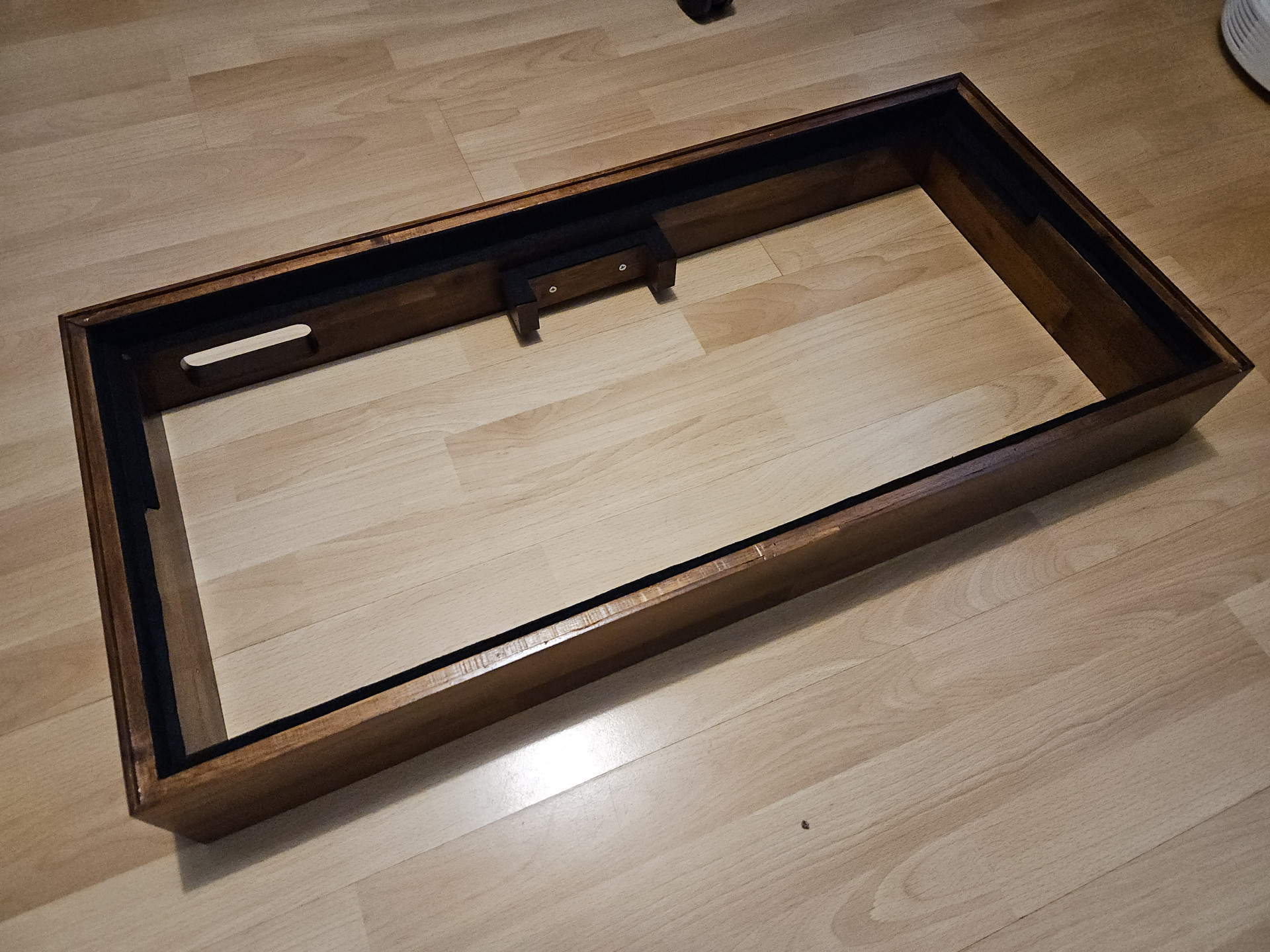
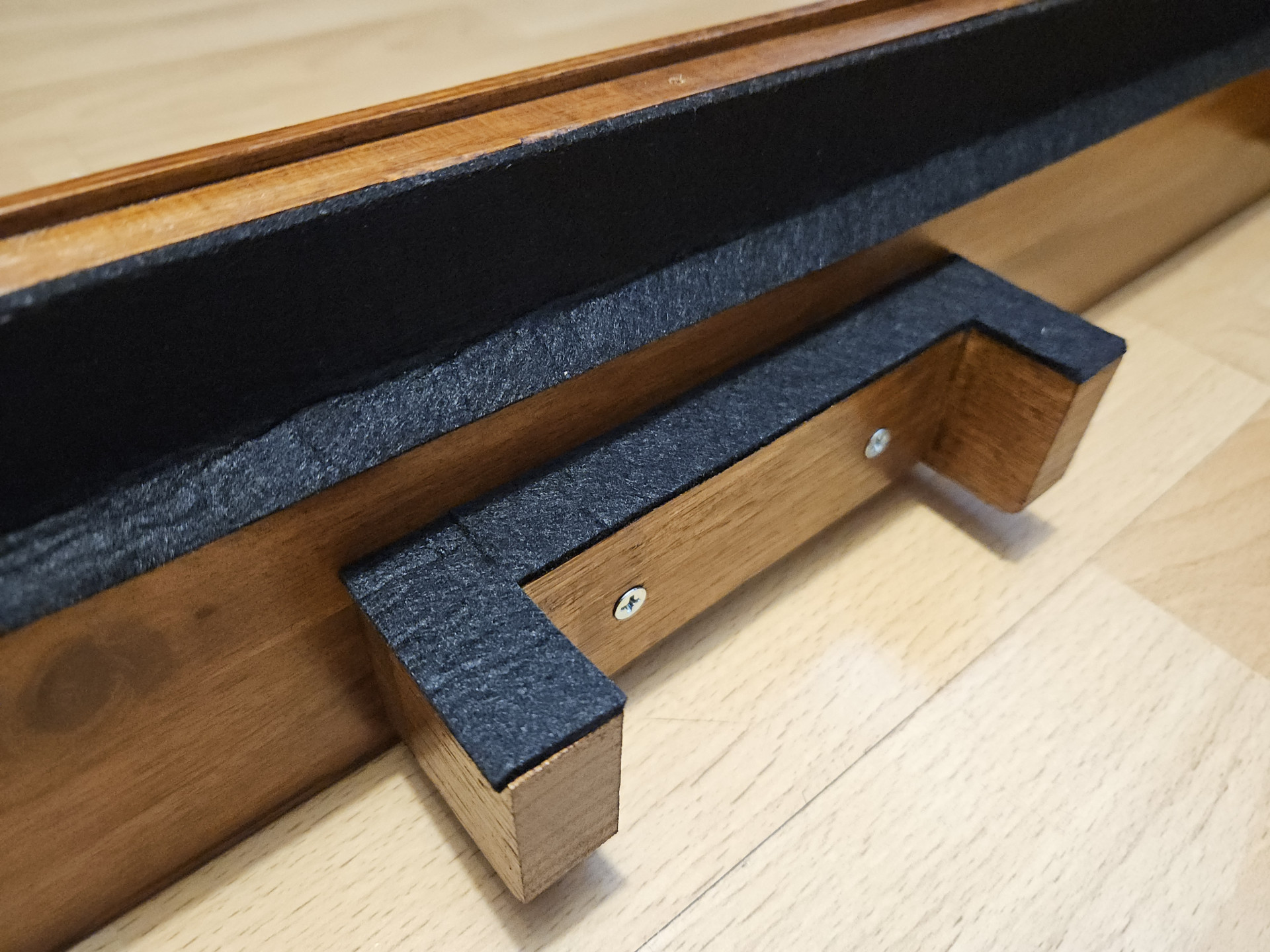
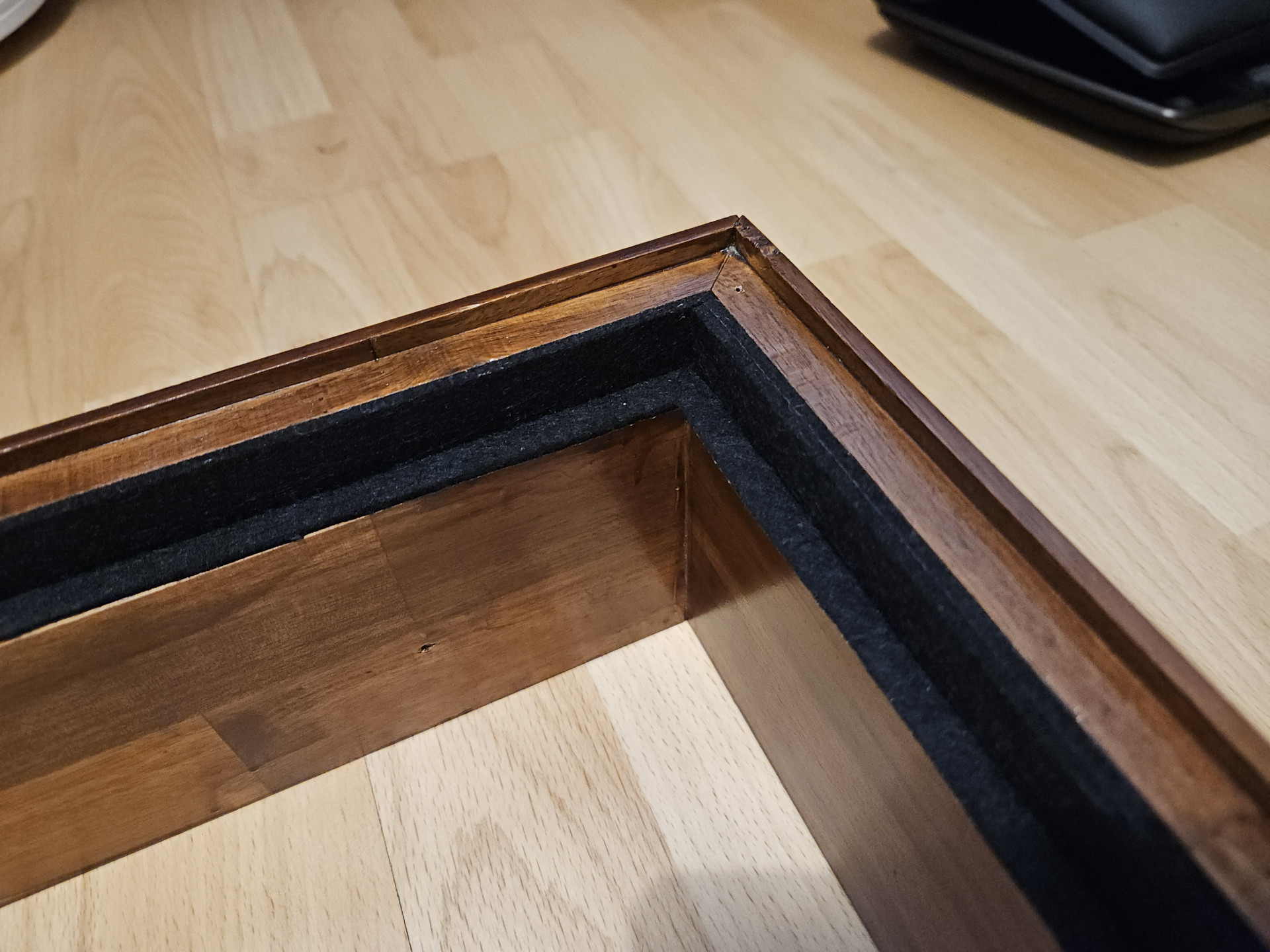
The frame is designed to support the monitor by its edges, though I did add an extra piece for support at the base where most of the weight is. I used felt tape so it would fit snugly.
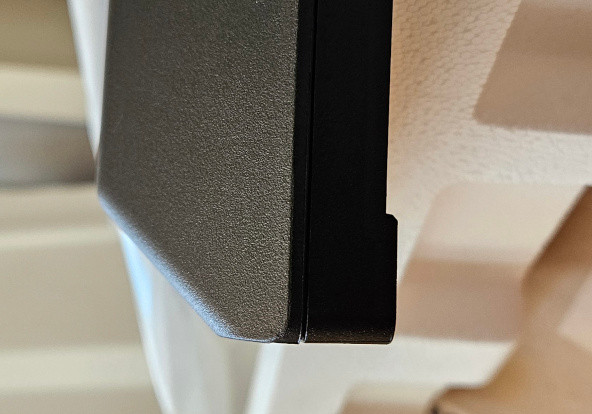
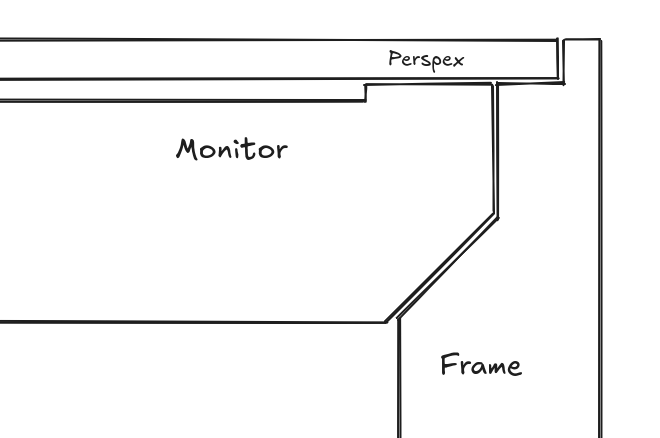
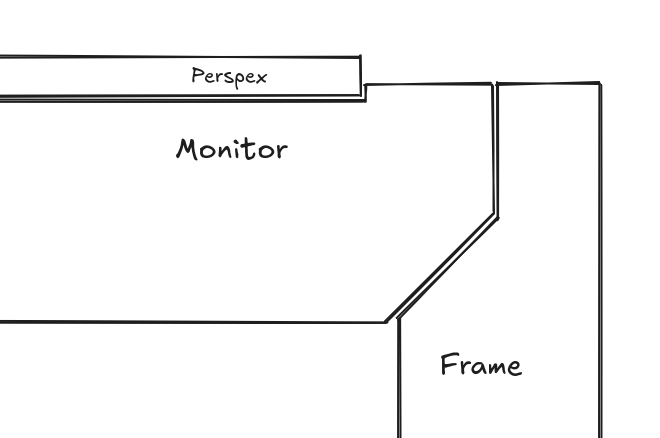
Unlike the build in the video, I wanted to put a sheet of perspex over the monitor to protect it. It needed to sit as close as possible over the screen, or else the DnD characters would look like they were floating above the map. Annoyingly, the monitor I used has a two-millimetre raised lip at the bottom, meaning the perspex couldn’t sit totally flat against it.
The lazy solution would be to either:
-
Have a 2mm gap over the entire monitor
-
Leave the bottom lip uncovered
-
Try to have the perspex bend up a bit at that edge
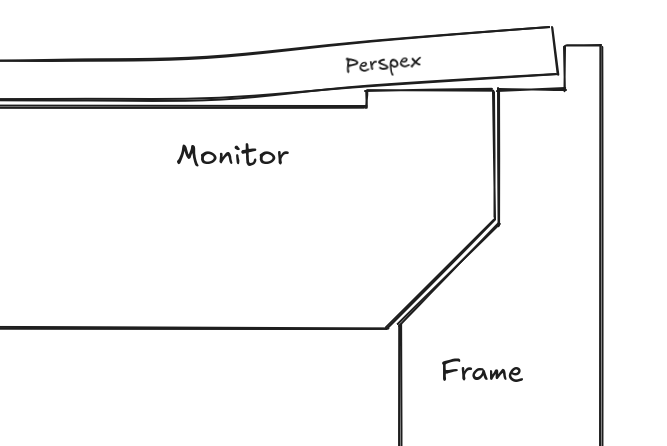
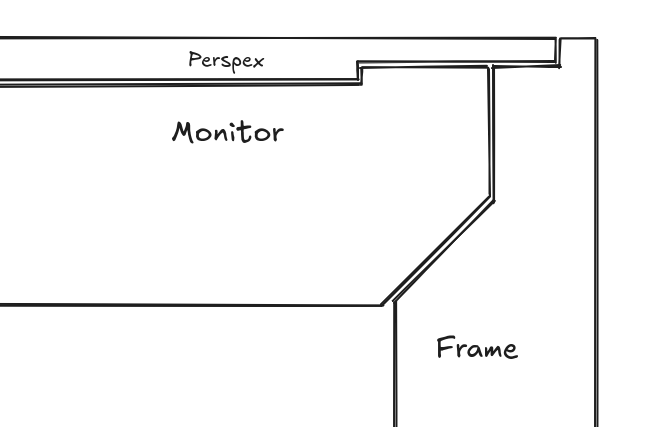
But I’d put too much work into this project to accept any of those compromises. (The perspex wouldn’t have been able to bend much anyway, being 5mm thick.) Instead I used a straight router bit to cut away material, thinning that edge of the perspex sheet down to 3mm so it perfectly fits over the lip. This worked well but it was a real pain to do, so if you’re building one of these, make sure you get a monitor that’s completely flat on the front.
(There’s one problem with this build, which is that perspex is quite reflective. If there’s a lot of light coming from a window or overhead light then the screen becomes hard to see. We’ve had to close the blinds when we’re using it. It’s possible to buy perspex with an anti-reflective coating, which is used by museums for display cases, but I expect it would cost an arm and a leg.)
As well as protecting the monitor, the perspex also clamps it in place. You can spin this whole thing around and the monitor won’t budge a millimetre.
To complete the look, the frame is finished with a walnut stain and varnish, and the perspex is secured with some nice slotted brass screws.
My DnD group has been using it for a couple of DnD sessions now and it’s worked great. Here it is in action:
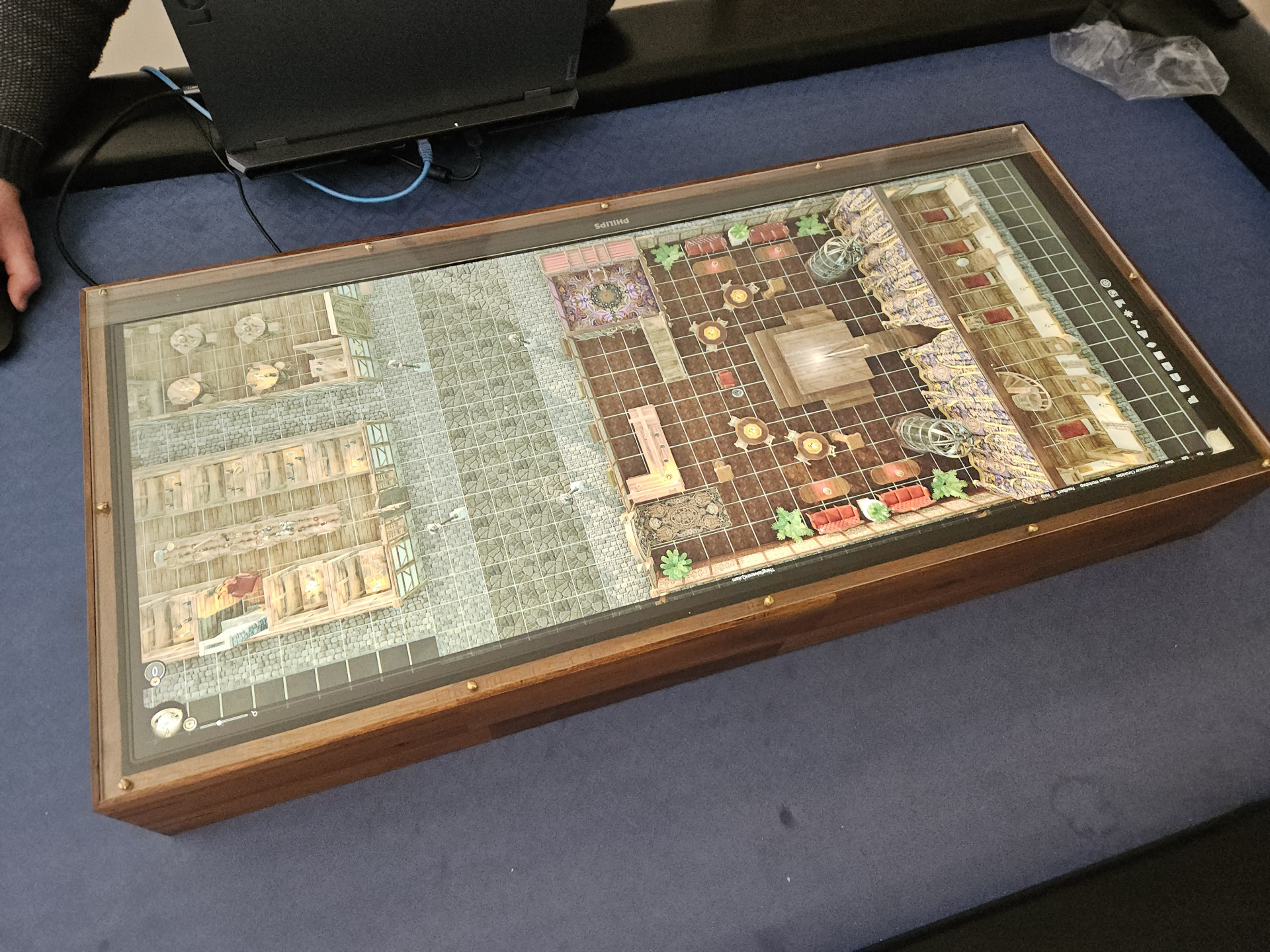
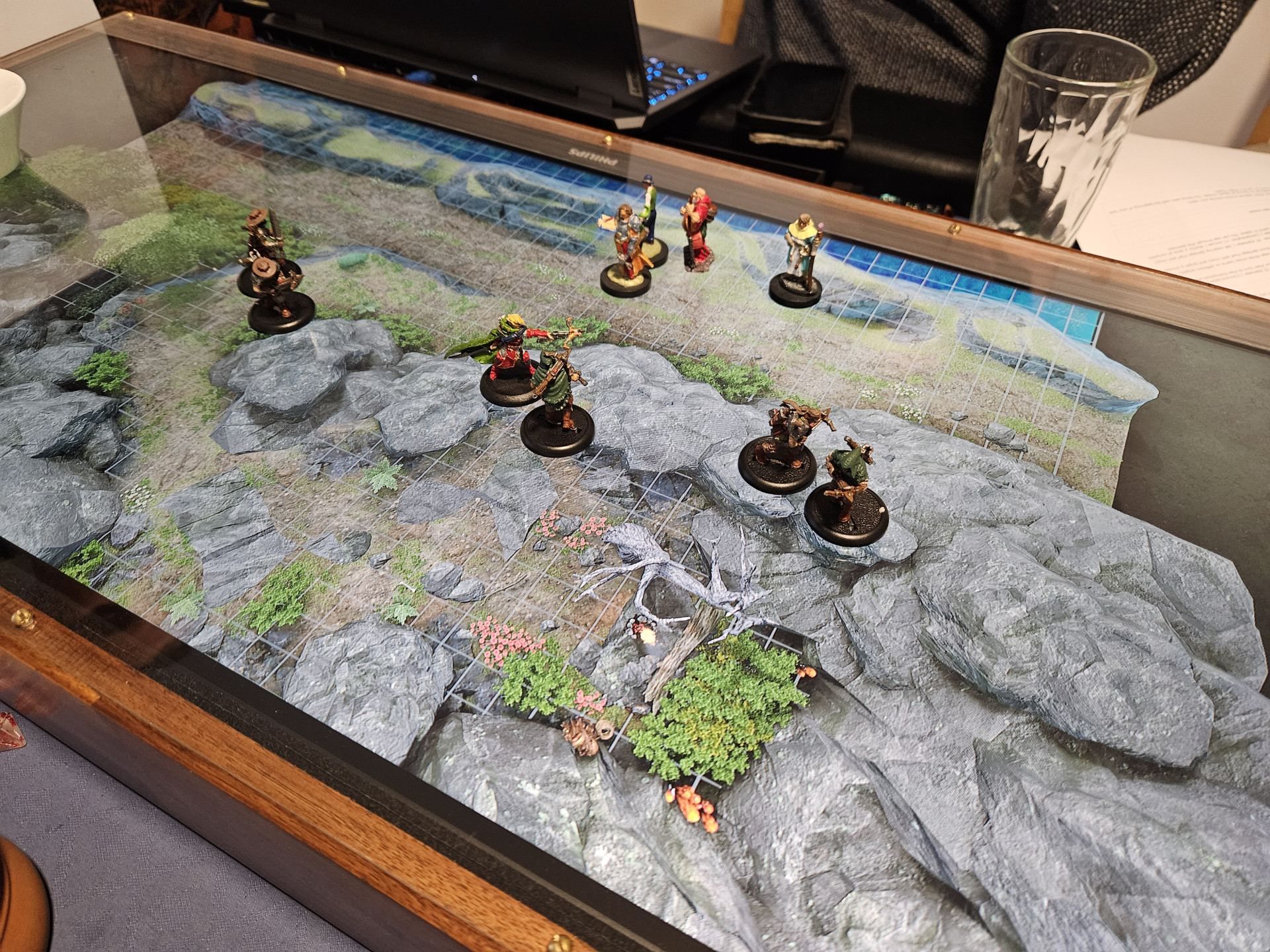
My friend Michael makes the maps using Dungeon Alchemist—a different RPG map-making software than the one whose video inspired this whole project, which is something of an injustice, but that’s just the way the dice rolled. ◼